Synopsis
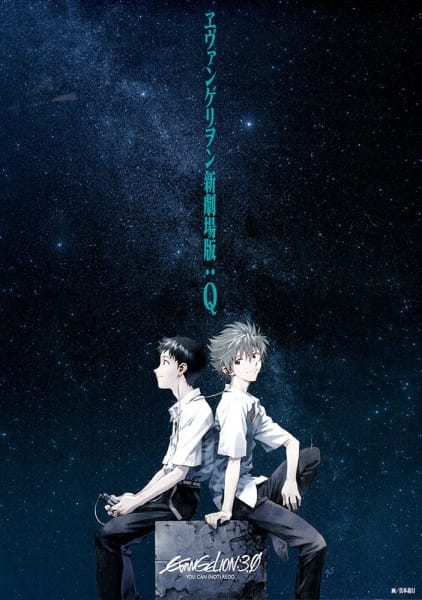
Evangelion Movie 3: Q — A Journey Into Disorientation and Unforgiving Truths
Prepare yourselves, anime enthusiasts and veterans of the *Evangelion* saga, for a cinematic experience that defies expectations and plunges its protagonist, and by extension, its audience, into a maelstrom of confusion, betrayal, and profound consequence. *Evangelion 3.0: You Can (Not) Redo*, often simply referred to by its Japanese title, *Evangelion: Q*, is not just another chapter in the iconic *Rebuild of Evangelion* film series; it is a seismic shift, a bold narrative gamble that redefines everything you thought you knew about Shinji Ikari’s world. For newcomers curious about the hype surrounding *Evangelion* and existing fans eager to revisit its complex lore, this film stands as a testament to the franchise’s willingness to push boundaries, offering an incredibly intense and often *unsettling* dive into its darkest depths. If you’re searching for a film that challenges, enthralls, and leaves an indelible mark, then buckle up for the wild ride that is *Evangelion 3.0*.
The Unsettling Aftermath: Fourteen Years Later
The film opens with a premise that immediately pulls the rug out from under the audience: a staggering fourteen-year time skip following the catastrophic Third Impact. Imagine waking up to a world utterly transformed, a post-apocalyptic wasteland where human civilization lies in ruins and the very air feels heavy with despair. This is the desolate reality Shinji Ikari, the series’ perpetually burdened protagonist, awakens to. Trapped within the dormant Evangelion Unit-01, he is recovered from the cold vacuum of space, not by welcoming allies, but by a world that has moved on, scarred and bitter. The sheer disorientation of this opening sequence is masterful, mirroring Shinji’s own confusion and setting a tone of profound unease that permeates every frame of the film.
A Captive’s Return: WILLE and the Cold Embrace of Former Friends
Shinji’s rescue is orchestrated by two familiar faces, albeit ones who have visibly matured and hardened: the fiery Asuka Langley Shikinami and the enigmatic Mari Illustrious Makinami. Yet, their reunion is anything but warm. Instead of solace, Shinji finds himself a prisoner of WILLE, a formidable military faction led by his former guardian and confidante, Misato Katsuragi. The sight of Misato, once a maternal figure, now a cold, determined commander, is a gut punch for Shinji and a shocking revelation for the audience. The shift in dynamics is palpable; the people Shinji once knew are almost unrecognizable, their faces etched with a bitterness that seems directly aimed at him.
The Weight of Unspoken Accusations
What follows is an excruciating period of isolation and suspicion. Shinji’s former allies, now frontline soldiers in WILLE’s war against NERV, view him with an icy detachment, refusing to offer comfort or explanation. He is treated not as a hero, but as a potential threat, a living reminder of the cataclysmic events that unfolded fourteen years prior. The film masterfully uses this emotional void to build suspense, leaving both Shinji and the viewer desperate for answers. What exactly did Shinji do? What are the “consequences of his actions” that have turned everyone he ever cared about against him? This narrative choice is incredibly bold, forcing Shinji to confront not just a ruined world, but a ruined reputation, a heavy burden of guilt he cannot yet comprehend.
A Glimmer of Hope in the Darkness: Rei and NERV’s Return
Just when Shinji’s despair seems absolute, a familiar, yet subtly different, figure appears: Rei Ayanami. In a move that further complicates the already convoluted plot, Rei rescues Shinji from WILLE and brings him back to the very heart of NERV headquarters, the organization WILLE is vehemently fighting against. This unexpected turn offers Shinji a fleeting sense of relief and a desperate hope for answers. However, the NERV he returns to is not the one he remembers, and this Rei, while bearing the same iconic features, carries an air of mystery that suggests a deeper, perhaps more sinister, truth.
The Enigmatic Kaworu Nagisa: A Beacon of Understanding
Within the desolate confines of NERV, Shinji encounters Kaworu Nagisa, a character whose presence instantly provides the warmth and understanding Shinji so desperately craves. Their rapid friendship blossoms amidst the ruins, offering Shinji a much-needed emotional anchor. Kaworu, with his serene demeanor and profound insights, seems to possess a unique understanding of the world’s current state and NERV’s ongoing war with the Angels. He offers Shinji not just companionship, but a sense of purpose, gently guiding him towards what he believes is a path to redemption and global restoration. Their shared musical moments, particularly on the piano, are tender oases in a film otherwise steeped in tension and conflict, highlighting the *fragile beauty* of their bond.
The Battle Lines Redrawn: Comrades Against Comrades
But this brief respite is merely the calm before a new, even more devastating storm. The true horror of *Evangelion 3.0* lies in its revelation that the enemies Shinji must now confront are no longer the monstrous Angels of old, but his former comrades, the very people he once fought alongside. The ideological chasm between WILLE and NERV has grown into an unbridgeable canyon, transforming what was once a unified front against a common foe into a bitter civil war. This shocking shift forces Shinji into an impossible position, where every choice he makes will inevitably lead to conflict with someone he once held dear.
The Irreversible Past: A Confrontation of Consequence
The film hurtles towards a climactic, brutal confrontation, a desperate battle to determine the future of a broken world. Shinji, driven by a desire to undo the past and alleviate his unbearable guilt, is drawn into a conflict with stakes far beyond anything he has ever faced. It is in this crucible of fire and despair that he will learn, first-hand and in the most devastating way imaginable, that the past truly cannot be undone. The consequences of his actions, and the actions of others, are etched into the very fabric of reality, irreversible and unforgiving. This theme of irreparable damage and the weight of choice forms the core emotional and philosophical backbone of *Evangelion 3.0*.
A Masterclass in Animation and Sound Design
Beyond its complex narrative, *Evangelion 3.0* is a visual and auditory masterpiece. The animation is nothing short of breathtaking, pushing the boundaries of what is possible in anime filmmaking. The action sequences are fluid, kinetic, and utterly spectacular, while the desolate landscapes and intricate Evangelion designs are rendered with meticulous detail. The film’s sound design is equally impressive, with a powerful score that perfectly complements the emotional highs and lows, from moments of quiet introspection to deafening explosions. Every frame, every note, is crafted to immerse the viewer in Shinji’s harrowing journey, making it a truly *cinematic event*.
A Deep Dive into Psychological Trauma and Existential Dread
True to *Evangelion* form, *3.0* is not merely an action spectacle; it is a profound psychological drama. The film delves deep into themes of grief, betrayal, responsibility, and the crushing weight of existential dread. Shinji’s journey is one of profound trauma, as he grapples with the fallout of his choices and the shattering of his perception of reality. The film challenges viewers to confront uncomfortable questions about morality, sacrifice, and the nature of heroism, leaving a lasting impact long after the credits roll. It is a bold character study wrapped in an apocalyptic epic.
Why You Must Experience Evangelion 3.0: Q
So, why should you watch *Evangelion 3.0: You Can (Not) Redo*? For newcomers, it offers a glimpse into the raw, unapologetic brilliance of the *Evangelion* universe, a series that consistently subverts expectations and delivers unparalleled emotional depth. While it might be a challenging entry point due to its narrative complexity, its visual splendor and intense drama are undeniable. For existing fans, it is an essential, albeit polarizing, chapter that bravely takes the *Rebuild* series in an entirely new, *unpredictable* direction, forcing a re-evaluation of everything that came before. It is a film that demands your attention, rewards your patience, and leaves you pondering its implications for days.
In conclusion, *Evangelion 3.0: You Can (Not) Redo* is an unforgettable cinematic journey. It is a film that dares to break free from conventional storytelling, delivering a narrative that is as disorienting as it is emotionally resonant. With its stunning animation, powerful score, and deeply unsettling themes, it stands as a testament to *Evangelion*’s enduring legacy as a franchise unafraid to challenge its audience. If you are ready for an anime experience that is bold, beautiful, and profoundly impactful, then this is one film you absolutely *cannot* afford to miss.
Anime Information
⭐ Score: 7.66/10
📺 Episodes: 1
Type: Movie
Status: Finished Airing
Duration: 1 hr 35 min min
Rating: PG-13 – Teens 13 or older
Genres
Themes
Studios
Khara
Previous Post
![Fate/stay night [Heaven's Feel] II. lost butterfly](https://anime.salite.site/wp-content/uploads/2025/10/bx21718-Hjj26Sapx1bd-150x150.jpg) Fate/stay night [Heaven's Feel] II. lost butterfly
Fate/stay night [Heaven's Feel] II. lost butterfly
Next Post
Gakkou Gurashi! (SCHOOL-LIVE!)