Synopsis
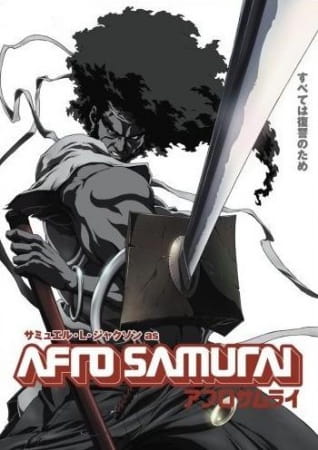
Prepare to step into a world where the thrum of a hip-hop beat meets the silent, deadly whisper of a samurai sword. A world painted in stark, vibrant colors, where every shadow holds a threat and every step is a testament to unyielding resolve. We’re talking about Afro Samurai, an anime phenomenon that isn’t just a series; it’s an *experience*, a visceral journey into the heart of vengeance, style, and relentless action. If you’ve been searching for an anime that defies convention, grips you from the first frame, and leaves an indelible mark, your quest ends here.
Afro Samurai isn’t merely a story; it’s a legend whispered on the wind, a bloody poem etched into the desolate landscapes it inhabits. For newcomers, imagine a tale so raw, so unapologetic in its pursuit of justice (or something akin to it), that it redefines what a samurai narrative can be. For long-time fans, this article will rekindle the fire, reminding you why Afro’s silent odyssey remains so profoundly impactful and utterly *cool*. This is an anime that demands to be seen, to be felt, to be *understood* in its magnificent brutality.
The Genesis of a Legend
At the very core of Afro Samurai lies a tragedy that births an unwavering purpose. Our story begins with a young boy, Afro, whose innocence is shattered in a single, agonizing moment. He witnesses the brutal, cold-blooded murder of his father at the hands of a formidable warrior known only as Justice. This isn’t just a duel; it’s a public execution, a shattering display of power that rips Afro’s world apart. Justice, after taking the life of Afro’s father, casually discards the Number Two headband and claims the mythical Number One, an artifact rumored to bestow *godly powers* upon its wearer. This single act ignites a spark of revenge that will consume Afro’s entire existence.
The Headbands: A Cycle of Power and Bloodshed
In this unforgiving world, two mystical headbands dictate the very fabric of power and destiny. The Number One headband grants its wearer unmatched authority, an almost divine invincibility. But there’s a catch, a crucial rule that fuels endless conflict: only the wielder of the Number Two headband has the *right* to challenge the Number One. This seemingly simple rule creates a perpetual cycle of violence, a hierarchy of death that ensures no peace can ever truly last. Justice, with the Number One, sits at the apex of this deadly pyramid, seemingly untouchable.
Afro’s Unyielding Path to Vengeance
Years pass, and the boy Afro transforms into a man of few words but immense skill. He has, through untold trials and bloodshed, acquired the coveted Number Two headband. This is his ticket, his *sacred right* to confront the man who destroyed his family. But his journey isn’t a straightforward path to an ultimate showdown. Oh no, Afro’s quest is far more complicated, far more perilous than simply facing Justice. His very existence as the Number Two makes him a magnet for every ambitious, desperate, or insane warrior in the land.
The Gauntlet: A World Against One Man
This is where Afro Samurai truly distinguishes itself. While the Number One can only be challenged by the Number Two, the Number Two can be challenged by *anyone*. This pivotal rule transforms Afro’s revenge mission into a relentless gauntlet, a constant, brutal struggle for survival against an entire world that wants his head. Every shadow hides an assassin, every encounter could be his last. His path to Justice is paved not just with good intentions, but with the bodies of countless foes who seek to claim the Number Two headband for themselves.
A Myriad of Foes and Obstacles
Imagine the sheer scale of this challenge. Afro isn’t just fighting a single rival or a small group of antagonists; he’s battling a *myriad* of foes, each with their own twisted motivations. From cunning ninjas and technologically enhanced cyborgs to fanatical cults and deranged bounty hunters, the diversity of his adversaries is astounding. Each encounter is a masterclass in choreographed violence, a testament to Afro’s unparalleled skill and his absolute refusal to fall. The obstacles are not just physical; they are mental, emotional, and spiritual, constantly testing the limits of his resolve.
The Weight of the Headband
The Number Two headband is not merely a symbol of power; it is a curse, a burden that isolates Afro completely. He walks a lonely path, his only companion often the haunting memories of his past and the constant threat of the present. This isolation deepens the narrative, transforming what could be a simple revenge flick into a profound exploration of what it means to carry such a heavy destiny. His silence isn’t just a character trait; it’s a shield, a reflection of the profound trauma and the singular focus that defines his life.
Beyond the Blade: The Deeper Themes
While the action is undeniably spectacular, Afro Samurai delves into much deeper themes. It asks profound questions about the nature of revenge: Is it truly satisfying? Does it bring peace, or merely perpetuate a cycle of violence? The anime masterfully explores the psychological toll of such a relentless pursuit, showcasing the loneliness, the burden of killing, and the constant internal battle Afro faces. It’s a meditation on destiny, free will, and the inescapable consequences of a life defined by a single, all-consuming goal.
A Feast for the Senses: Unforgettable Style and Sound
Afro Samurai isn’t just a story; it’s a *visual and auditory masterpiece*. The animation style is utterly distinctive, a bold fusion of traditional samurai aesthetics with futuristic technology and a gritty, hip-hop sensibility. The character designs are iconic, the environments are breathtakingly desolate, and the action sequences are fluid, visceral, and incredibly impactful. Every sword swing, every dodge, every drop of blood is rendered with meticulous detail, pulling you deeper into Afro’s brutal world.
The Iconic Soundtrack and Voice Acting
And then there’s the sound. The legendary RZA of the Wu-Tang Clan provides an *unforgettable* soundtrack that is as much a character as Afro himself. The beats are atmospheric, the tracks are powerful, perfectly complementing the on-screen action and amplifying the emotional weight of Afro’s journey. Coupled with the iconic voice work of Samuel L. Jackson as Afro (and his chatterbox inner demon, Ninja Ninja), the auditory experience is unparalleled. Jackson’s gravelly tones give Afro a silent strength, while his comedic timing as Ninja Ninja provides much-needed levity in an otherwise grim world.
Why Afro Samurai is an Absolute Must-Watch
If you’re still wondering whether to dive into this incredible anime, let me assure you: Afro Samurai is an *essential* viewing experience. It’s a short, impactful series that doesn’t waste a single moment. It’s a masterclass in storytelling, blending raw action with profound thematic depth, all wrapped in an incredibly stylish package. It’s an anime that stands apart, a bold statement that continues to resonate with audiences worldwide.
Whether you’re drawn to its unique blend of genres, its relentless action, its philosophical underpinnings, or its sheer, unadulterated coolness, Afro Samurai delivers on every front. It’s a journey into a world where honor is a forgotten word and revenge is the only currency. So, dim the lights, crank up the volume, and prepare to be utterly captivated by the silent, deadly odyssey of Afro Samurai. You won’t regret it.
Anime Information
⭐ Score: 7.37/10
📺 Episodes: 5
Type: TV
📅 Year: 2007
Status: Finished Airing
Duration: 26 min per ep min
Rating: R+ – Mild Nudity
Producers: Dentsu, Victor Entertainment, Pony Canyon, Fuji TV
Genres
Themes
Studios
Gonzo
Previous Post
 Amagami SS
Next Post
Mimi wo Sumaseba (Whisper of the Heart)