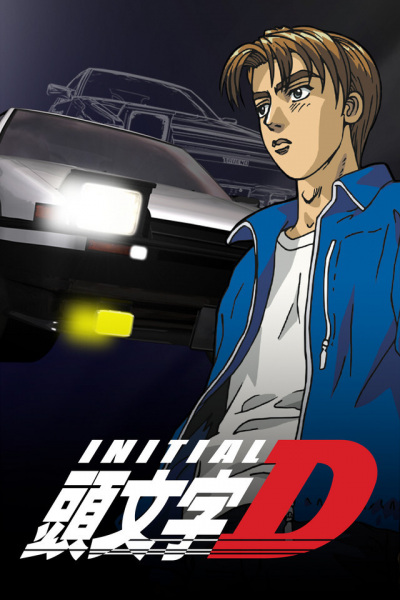
Synopsis
The roar of an engine, the screech of tires, the impossible ballet of a car sliding sideways with perfect precision – does that ignite something within you? If so, prepare to have your perceptions of racing, anime, and even everyday life irrevocably shifted. Initial D First Stage isn’t just an anime; it’s a cultural phenomenon, a legendary origin story that launched countless dreams of drifting and redefined what a “car anime” could be. Forget everything you thought you knew about street racing; this series is about to take you on a thrilling, unexpected ride down the treacherous mountain passes of Japan.
Initial D First Stage: The Legend Begins
Imagine a hero who doesn’t even know he’s a hero. This isn’t your typical shonen protagonist with grand ambitions or a burning desire for glory. Our story centers on Takumi Fujiwara, a seemingly ordinary high school student in the quiet town of Akina. His life is defined not by adrenaline-fueled races, but by the mundane, unglamorous task of delivering tofu for his father’s shop every single morning. This isn’t a hobby; it’s a chore, a tiring routine that forces him to navigate the winding roads of Mount Akina before the sun even fully rises.
Takumi’s world is devoid of the passion that fuels car enthusiasts. He knows nothing of horsepower, torque, or the intricate mechanics that captivate his friends. To him, cars are simply tools, and driving is just another obligation. The venerable Toyota AE86 Sprinter Trueno, his father’s old, seemingly unremarkable tofu delivery car, is merely a means to an end. Yet, these years of daily, pre-dawn runs have forged something extraordinary within him – an unparalleled intuition for the mountain roads, a silent mastery honed through sheer repetition and necessity.
The Arrival of the RedSuns
The tranquility of Akina is shattered by the arrival of the Akagi RedSuns, an infamous and highly skilled team of street racers from the neighboring prefecture. Led by the brilliant strategist Ryousuke Takahashi and his fiery younger brother, Keisuke, the RedSuns have a singular, ambitious goal: to conquer every challenging mountain pass in the Kanto region, establishing themselves as the undisputed fastest crew. They arrive with their gleaming, high-performance machines, exuding confidence and a professional aura that intimidates local racers.
Keisuke, a hot-headed but immensely talented driver of a Mazda RX-7 FD3S, is the RedSuns’ spearhead. He’s all about speed, aggression, and pushing his car to its absolute limits. The RedSuns are a formidable force, their reputation preceding them, and their challenge sends ripples of excitement and apprehension through the local racing scene. They expect dominance, a swift conquest of Akina’s downhill course, but fate has a surprise waiting for them.
The Phantom of Akina: An Unbelievable Encounter
Returning from a recon run down Mount Akina, Keisuke Takahashi is still basking in the thrill of the mountain roads when, to his utter disbelief, he is overtaken. Not by another high-performance sports car, but by an old, white Toyota AE86. This isn’t just an overtake; it’s a blur, a ghost of a car that disappears into the night, leaving Keisuke utterly stunned and humiliated. His professional pride is wounded, and his understanding of mountain racing is shaken to its core.
The incident ignites a burning question within the Takahashi brothers: Who is this mysterious driver? How could an outdated car, driven with such impossible skill, humiliate one of their aces? The legend of the AE86 of Mount Akina begins to spread like wildfire, a whisper among the racing community, a challenge to the RedSuns’ ambition. This singular, unexpected event sets in motion a chain of challenges, rivalries, and self-discovery that will redefine Takumi’s life and the world of street racing.
More Than Just Speed: The Heart of the Mountain
Initial D First Stage is far more than a simple racing anime; it’s a masterclass in narrative storytelling that delves into character development, the psychology of competition, and the unique subculture of Japanese street racing. Each race isn’t just about who crosses the finish line first; it’s a strategic battle, a test of will, and a journey into the minds of the drivers. You’ll learn about racing lines, weight transfer, tire degradation, and the subtle art of drifting, all explained in an engaging, accessible way that even non-car enthusiasts can appreciate.
The series brilliantly captures the raw atmosphere of night races on winding mountain passes. The dark, fog-laden roads, the flashing headlights, the thunderous engine notes echoing through the valleys – it’s an immersive experience. The stakes are personal, often fueled by pride, reputation, and the sheer love of driving. You’ll witness Takumi’s gradual awakening, his slow understanding of the incredible talent he possesses, and his reluctant embrace of the racing world. His journey from indifference to genuine passion is one of the most compelling aspects of the show.
The Unforgettable Soundtrack: Eurobeat’s Legacy
It would be impossible to discuss Initial D First Stage without highlighting its iconic Eurobeat soundtrack. This high-energy, pulsing genre of music becomes an integral character in itself, perfectly synchronizing with the intense race sequences. The moment the Eurobeat kicks in, you know something spectacular is about to happen. Tracks like “Deja Vu,” “Running in the 90s,” and “Gas Gas Gas” are not just background music; they elevate every drift, every overtake, and every moment of tension, making the races utterly electrifying and unforgettable. The soundtrack alone has garnered a massive following and is synonymous with the series’ identity.
Why Initial D First Stage is a Must-Watch
For newcomers to the series, Initial D First Stage offers an incredibly accessible entry point into the world of car anime. You don’t need to be a gearhead to appreciate the underdog story, the compelling characters, and the sheer thrill of the races. The narrative is driven by relatable themes of self-discovery, friendship, and challenging expectations. It’s an exciting coming-of-age story wrapped in a package of high-octane action.
For existing fans, revisiting First Stage is a nostalgic trip back to where the legend began. It’s a chance to appreciate the foundational elements that made the series a global phenomenon. You’ll see the subtle hints of Takumi’s future greatness, the initial sparks of rivalry that would define entire arcs, and the raw, unpolished charm that set Initial D apart from everything else. It’s a reminder of why we fell in love with the AE86 and the magic of Mount Akina.
The Visuals: A Blend of Old and New
The animation style of Initial D First Stage is distinctive for its time. It famously blended traditional 2D animation for character interactions with early 3D CGI for the car models during races. While the CGI might appear a bit dated by today’s standards, it possesses a unique charm and was groundbreaking at the time. More importantly, it allowed for dynamic camera angles and precise depictions of vehicle movement that traditional animation struggled with. This blend creates a retro aesthetic that is now part of its enduring appeal, giving it a timeless, classic feel.
Your Journey Down Akina Awaits
Initial D First Stage is more than just an anime about racing; it’s a story about finding your passion in the most unexpected places, about the quiet legends forged in the dark of night, and about the sheer exhilaration of pushing boundaries. It’s a series that has inspired countless car enthusiasts, influenced popular culture, and continues to hold a special place in the hearts of anime fans worldwide.
So, if you’re looking for an anime that delivers heart-pounding action, compelling characters, an iconic soundtrack, and a story that will stay with you long after the final credits roll, then your journey down Mount Akina is calling. Don’t miss out on the series that started it all. Discover the legend of the AE86 and the reluctant genius of Takumi Fujiwara. Get ready to ignite your engines and experience the thrill of Initial D First Stage.
Anime Information
⭐ Score: 8.36/10
📺 Episodes: 26
Type: TV
📅 Year: 1998
Status: Finished Airing
Duration: 25 min per ep min
Rating: PG-13 – Teens 13 or older
Producers: OB Planning, Fuji TV
Genres
Themes
Studios
Gallop, Studio Comet