Synopsis
A Daring Deconstruction: Why Mahou Shoujo Madoka☆Magica Remains a Genre-Defining Masterpiece
Forget everything you thought you knew about magical girls. Cast aside the glitter, the friendship speeches, and the unwavering optimism. Mahou Shoujo Madoka☆Magica, often shortened to Madoka Magica, isn’t just an anime; it’s a seismic shift in the magical girl genre, a breathtakingly bold deconstruction that plunges viewers into a world far darker, more philosophical, and utterly unforgettable than its deceptively cute art style suggests. If you’re searching for an anime that will challenge your perceptions, stir your emotions, and leave an indelible mark, then prepare to embark on a journey that begins with a simple wish and unravels into a profound exploration of hope, despair, and sacrifice.
The story opens with a vision of impending doom, a terrible nightmare that haunts the ordinary life of 14-year-old Madoka Kaname. In this vivid, unsettling dream, she witnesses a desolate, ruined city under a sky heavy with dread. A lone girl, clad in a sleek black uniform, fights a desperate, losing battle against a monstrous, ethereal entity that looms with malevolent power. It’s a scene of utter helplessness, and from the shadows emerges a peculiar, cat-like creature, its voice a tempting whisper in Madoka’s mind: the only way to avert such a tragic fate, it claims, is for her to forge a contract and become a magical girl.
The line between dream and reality blurs with the arrival of a new transfer student at Mitakihara Middle School. Homura Akemi, the very girl from Madoka’s nightmare, is an enigma wrapped in an air of cool detachment. Her presence is a chilling confirmation of Madoka’s dream, and her cryptic warning – “Stay just the way you are” – serves as an ominous prelude to the chaos that is about to unfold. Homura’s motives are shrouded in mystery, her gaze often fixed on Madoka with an intensity that hints at a deeper, unspoken knowledge, adding a layer of suspense that hooks viewers from her very first appearance.
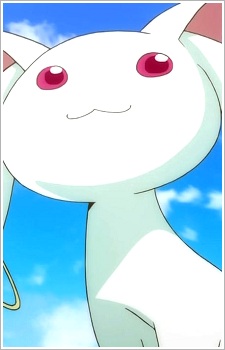
The fateful encounter that truly sets Madoka’s world spinning occurs shortly after, when she and her best friend, the spirited and idealistic Sayaka Miki, stumble upon the same peculiar, cat-like creature from Madoka’s dream. Introducing himself as Kyubey, this seemingly benevolent entity reveals the existence of magical girls and the abstract, despair-spreading beings they battle: Witches. Kyubey extends an irresistible offer: sign a contract with him, take on the duty of fighting Witches, and in return, any single wish, no matter how grand or impossible, will be granted. It’s a tempting proposition, a chance to alter fate, save a loved one, or achieve a long-held desire.
However, as Homura’s persistent warnings suggest, the path of a magical girl is far more treacherous than Madoka and Sayaka could ever imagine. The initial allure of power and altruism quickly gives way to a grim reality, where every victory comes at a cost and every wish carries an unforeseen burden. Madoka Magica meticulously dismantles the cherished tropes of its genre, replacing the bright, hopeful fantasy with a narrative that is unflinchingly dark, brutally honest, and profoundly moving. This isn’t a simple tale of good triumphing over evil; it’s a deep dive into the moral ambiguities of power, sacrifice, and the very nature of existence.
What makes Madoka Magica a truly groundbreaking anime is its masterful subversion of expectations. It takes the familiar archetype of the innocent magical girl, armed with cute outfits and flashy powers, and strips away the sugar-coating to reveal the raw, often horrifying implications of such a life. It challenges viewers to question the true price of heroism and the dark mechanisms that often underpin seemingly benevolent systems. This series isn’t afraid to explore themes of existential dread, the psychological toll of fighting an endless battle, and the tragic consequences of choices made in desperation.
The abstract beings known as ‘Witches’ are central to this dark tapestry. Born from human despair, these entities inhabit surreal, often grotesque, pocket dimensions known as ‘Labyrinths,’ each a unique manifestation of a Witch’s twisted psyche. The visual design of these Labyrinths is a testament to the anime’s creative genius, blending collage-style animation with unsettling imagery to create an atmosphere of pure, psychological horror. Battling these Witches is not just a physical struggle but a descent into a world where sanity itself is constantly threatened, adding another layer of depth and terror to the magical girls’ plight.
Beyond the action and suspense, Madoka Magica is a profound meditation on universal themes. It delves into the delicate balance between hope and despair, illustrating how easily one can tip into the other. The weight of a wish, the nature of sacrifice, the true meaning of heroism, and the complexities of friendship under extreme duress are all explored with remarkable nuance. The narrative forces its characters, and by extension, its audience, to grapple with difficult philosophical questions, elevating it far beyond typical anime fare into the realm of truly thought-provoking storytelling.
The ensemble of characters is equally compelling. Madoka, initially a picture of innocence and indecision, undergoes a profound transformation. Sayaka, driven by a desire to help others, confronts the harsh realities of her choices. Homura, with her mysterious past and unwavering resolve, carries a burden that defines her every action. Even the supporting magical girls, such as the elegant Mami Tomoe and the pragmatic Kyoko Sakura, have arcs that are far from conventional, often leading to heartbreaking revelations. Their journeys are fraught with emotional turmoil and difficult decisions, ensuring that no character feels safe or predictable.
Visually and aurally, Madoka Magica is a triumph. Studio Shaft’s distinctive animation style, characterized by its unique character designs, surreal backgrounds, and innovative visual storytelling, perfectly complements the narrative’s dark whimsy. The creative genius of writer Gen Urobuchi, famously dubbed the “Urobutcher” for his penchant for dark and tragic narratives, shines through in every meticulously crafted plot twist. Complementing this is Yuki Kajiura’s hauntingly beautiful musical score, which effortlessly shifts from ethereal and melancholic to intense and dramatic, enhancing the emotional impact of every scene and cementing the anime’s status as an audio-visual masterpiece.
Even its broadcast history adds to its legendary status. The devastating 2011 Tōhoku earthquake and tsunami caused the final two episodes, 11 and 12, to be delayed. When they finally aired as a double feature on April 21, 2011, the anticipation had reached a fever pitch, and the conclusion delivered a powerful, cathartic experience that resonated deeply with a nation grappling with its own despair and resilience. This unforeseen delay only solidified Madoka Magica’s place in anime history, demonstrating its cultural impact and the profound connection it forged with its audience.
So, should you watch Mahou Shoujo Madoka☆Magica? Without a shadow of a doubt, yes. This is not merely an anime to consume; it is an experience to be savored, dissected, and remembered. It’s a series that dares to redefine a beloved genre, offering a narrative that is as intellectually stimulating as it is emotionally devastating. Prepare to have your expectations shattered, your heart gripped, and your mind challenged. Dive into the world of Madoka Magica, and discover why this dark, brilliant masterpiece continues to captivate and provoke audiences, cementing its legacy as one of the most important anime of its generation.
Anime Information
Genres
Studios
Aniplex, Shaft, Mainichi Broadcasting System, Movic, Nitroplus, Aniplex of America, Madoka Partners, Houbunsha, Manga Entertainment
Previous Post
 Bakemonogatari
Next Post
Devilman: Crybaby
Characters