Synopsis
Perfect Blue: A Descent into the Mind’s Darkest Corners – An Essential Watch
Prepare yourself for a journey unlike any other, a mind-bending descent into the terrifying depths of identity, obsession, and the blurred lines between fantasy and reality. Satoshi Kon’s 1997 masterpiece, Perfect Blue, isn’t just an anime film; it’s a cinematic landmark, a psychological thriller that has captivated audiences and inspired filmmakers worldwide for decades. If you’re searching for an anime that challenges your perceptions and leaves an indelible mark long after the credits roll, then look no further. This is not merely a movie; it is an experience, a chilling exploration of the human psyche under extreme duress, and an absolute must-watch for anyone who appreciates truly intelligent storytelling.
A Pop Star’s Perilous Pivot
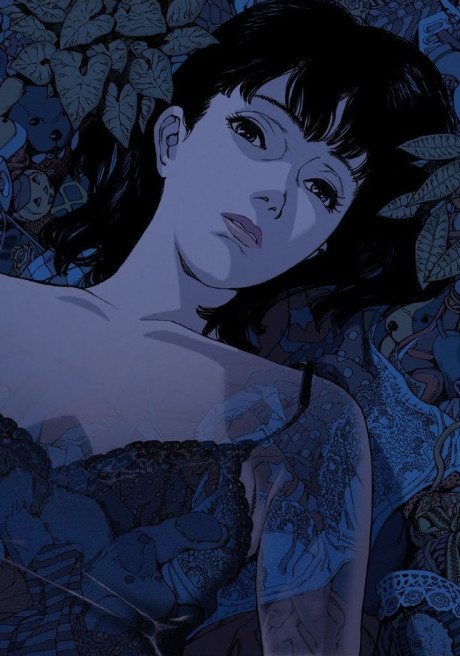
The narrative thrust of Perfect Blue begins with Mima Kirigoe, a rising star in the bubblegum pop group “CHAM!” At the peak of her idol career, Mima makes a monumental decision: to shed her squeaky-clean image and pursue a more serious path as an actress and model. This pivotal choice, encouraged by her well-meaning but ultimately misguided managers, Rumi and Tadokoro, sets the stage for her terrifying ordeal. She believes she is stepping into a new, more mature phase of her life, but what she unknowingly steps into is a labyrinth of psychological torment and real-world danger. Her fans, particularly the most devoted and unhinged, are not ready to let their “Mima-chan” go, and their disapproval rapidly morphs into something far more sinister.
The Unraveling of Reality
Mima’s first major acting role is a recurring part in a popular crime drama called “Double Bind.” The role itself is challenging, requiring her to portray a character who undergoes traumatic experiences, further mirroring and perhaps even exacerbating Mima’s own growing anxieties. As she delves deeper into her new career, the world around her begins to fray. Strange, unsettling events plague her daily life. Her handlers and collaborators, people intricately involved in her career transition, begin turning up murdered in increasingly brutal ways. The line between the gritty fictional world of “Double Bind” and Mima’s actual existence starts to blur, creating a pervasive sense of dread that seeps into every frame.
Mima’s Fractured Identity
At the heart of Perfect Blue lies Mima’s profound struggle with identity. The innocent, cheerful pop idol Mima-chan, a persona carefully crafted for public consumption, clashes violently with the emerging, more complex, and vulnerable actress Mima. She is haunted by visions of her former self, a spectral Mima-chan who taunts her, questions her choices, and embodies the innocence she feels she’s lost. This internal conflict is not just metaphorical; it manifests as vivid hallucinations and a growing sense of guilt that pushes her towards a frenzied paranoia. The film masterfully portrays how the pressure of public perception can shatter an individual’s sense of self, leaving them adrift in a sea of conflicting expectations.
The Stalker’s Shadow: Online and Off
Adding another terrifying layer to Mima’s ordeal is the relentless presence of a stalker. Initially, this threat manifests online, through a meticulously detailed website called “Mima’s Room,” which purports to be Mima’s personal diary. However, the entries reveal intimate details of her life that only she could know, creating a deeply unsettling invasion of privacy. This early depiction of online stalking was remarkably prescient, foreshadowing the dark side of internet culture long before it became a widespread concern. As the online threat escalates, the stalker’s presence becomes terrifyingly physical, closing in on Mima in ways she could never have anticipated, making the danger more real and immediate than she could possibly imagine.
A Masterclass in Psychological Thriller
Perfect Blue is frequently hailed as one of the most important animated films of all time, and for good reason. Its iconic status isn’t just about its shocking plot twists; it’s about its profound psychological depth. The film doesn’t rely on cheap jump scares; instead, it builds an atmosphere of suffocating dread and psychological terror that slowly creeps under your skin. It’s a masterclass in suspense, using ambiguity and unreliable narration to keep the audience guessing, forcing them to question every scene alongside Mima. You will find yourself constantly questioning what is real, what is a dream, and what is a manifestation of Mima’s unraveling mind.
Satoshi Kon’s Visionary Direction
Much of the film’s brilliance can be attributed to its visionary director, Satoshi Kon. Known for his groundbreaking work in anime, Kon possessed an unparalleled ability to weave intricate narratives that seamlessly blend reality with fantasy. In Perfect Blue, his signature style is on full display: non-linear storytelling, dream logic, and a masterful use of editing that disorients and mesmerizes. He uses visual metaphors and fragmented sequences to plunge the viewer directly into Mima’s subjective experience, making her paranoia your own. His direction elevates what could have been a simple thriller into a profound meditation on fame, identity, and mental fragility.
The Enduring Legacy and Influence
The impact of Perfect Blue extends far beyond the realm of anime. Its innovative narrative techniques and thematic explorations have resonated deeply with live-action filmmakers. Notably, director Darren Aronofsky has acknowledged its influence on his critically acclaimed film Black Swan, a testament to Perfect Blue’s universal themes and powerful storytelling. This isn’t merely an anime for fans of the genre; it’s a film that has shaped modern cinema, proving the profound artistic potential of animation to tackle complex, mature subjects with unparalleled nuance and intensity.
Visual Storytelling at its Peak
Beyond its intricate plot, Perfect Blue is a feast for the eyes, showcasing the incredible artistry of Japanese animation. The character designs are expressive, conveying Mima’s vulnerability and fear with chilling accuracy. The animation style itself is fluid and dynamic, allowing for seamless transitions between Mima’s perceived reality and her nightmarish visions. The use of color, lighting, and composition all contribute to the film’s unsettling atmosphere, from the vibrant, artificial glow of the pop idol world to the dark, claustrophobic spaces of Mima’s deteriorating mental state. Every frame is meticulously crafted to enhance the psychological impact.
A Soundtrack to Your Nightmares
Complementing the stunning visuals is a haunting and atmospheric score that perfectly underscores Mima’s descent. The sound design is crucial in building the film’s tension, utilizing subtle cues, unsettling silences, and jarring shifts in music to mirror Mima’s fractured reality. The score doesn’t just accompany the visuals; it becomes an active participant in Mima’s psychological torment, amplifying the fear and confusion that permeate every scene. The auditory experience of Perfect Blue is as vital to its impact as its visual storytelling.
Why You Must Watch Perfect Blue
If you’re looking for an anime that transcends typical genre boundaries, offers a truly unique cinematic experience, and challenges you intellectually and emotionally, then Perfect Blue is an absolute must-watch. It’s a film that explores the dark underbelly of celebrity culture, the terrifying consequences of obsession, and the fragility of the human mind with unflinching honesty. It’s a thought-provoking, suspenseful, and ultimately unforgettable journey into the heart of psychological horror. Be warned, however, that this film contains mature themes, including violence and disturbing psychological content, making it best suited for adult audiences.
Perfect Blue is more than just an anime film; it’s a cultural touchstone that continues to provoke discussion and inspire awe. It’s a testament to the power of animation as a medium for profound storytelling, and a chilling reminder of the dangers that lurk when the lines between our public personas and private selves begin to blur. Dive into the world of Mima Kirigoe, if you dare, and discover why this iconic psychological thriller remains one of the most important animated films of all time.
Anime Information
Genres
Studios
MADHOUSE, Rex Entertainment , ONIRO, Techno Sound, GKIDS
Previous Post
 Fruits Basket
Next Post
Accel World
Characters